
How to Find Equivalent Bearing Replacements: A Cross-Reference Guide for Maintenance Teams
Finding a bearing that fits is the easy half. Proving that a replacement will carry the same load, survive the same temperature and hold the same precision is the half that keeps a production line running, and it is where a documented cross-reference method earns its keep.
A Chinese equivalent is not simply a cheaper part. For around 95% of industrial duties, a certified Chinese replacement meets or beats the original specification — and the belief that it cannot has cost manufacturers a great deal in unnecessary downtime and in premium payments for branded originals.
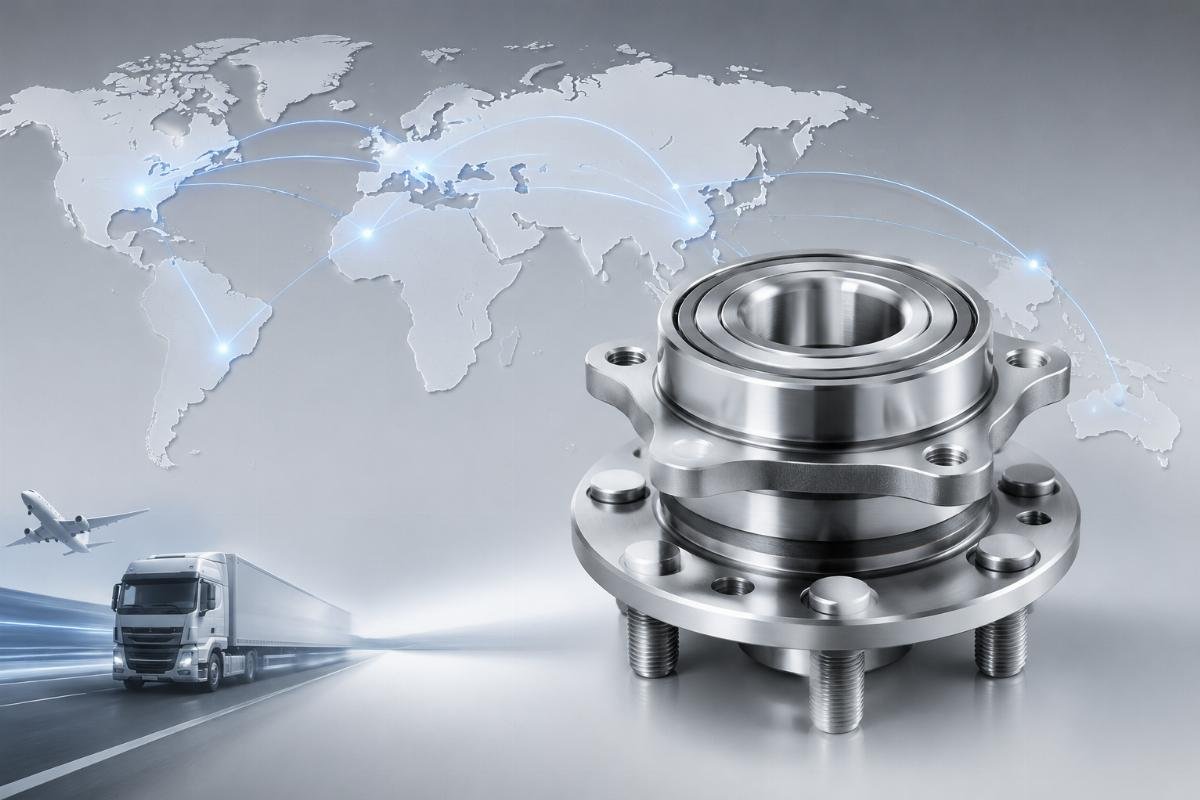
A China-based supplier holding 10,000+ SKUs under ISO 9001 can turn around an equivalent for most major brand designations inside 72 hours, with traceability and technical backup attached. A decade of work with maintenance managers in more than 40 countries has shown us what that changes: an unplanned shutdown becomes an incident with a known outcome and a fixed clock.
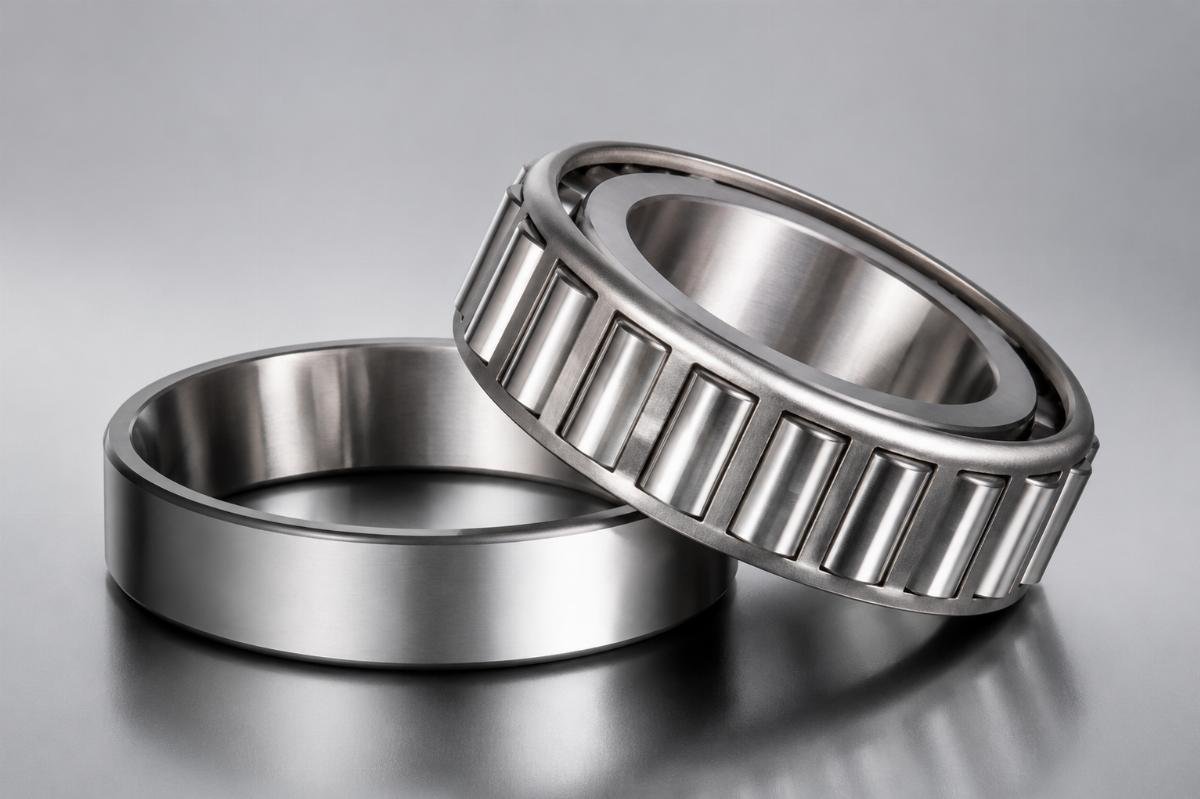
What separates a good replacement from a lucky one is verification across load capacity, material composition and application requirement — the areas where a specialist Chinese supplier now has real depth, and the areas a catalog page never covers.
Why Inaccurate Cross-Referencing Drives Up Maintenance Downtime
A mismatched bearing does more than fail early; it can put $22,000 an hour on the downtime ledger. In steel and mining, where lines run around the clock, one wrong replacement is enough to wipe out a quarter's margin through cascading equipment damage and missed shipments.
| Performance Factor | Industry Average Impact of Mismatch |
|---|---|
| Load Rating | 37% higher failure rate with 10% underrated bearings |
| Material Compatibility | 2.4x shorter service life in high-temperature applications |
| Precision Class | 40% increased vibration leading to premature equipment wear |
| Lubrication Matching | 65% of premature failures traced to incompatible lubrication |
| Dimensional Tolerance | 82% of cross-reference errors involve incorrect clearance specifications |
A steel mill came to us mid-shutdown after a FAG 22330 spherical roller failed on a critical line. The original maker quoted four weeks. Our cross-referenced 22330 CA/W33 matched the envelope exactly, at 150mm bore, 320mm outside diameter and 108mm width, passed dimensional inspection at 100%, and landed in 72 hours. It saved the plant more than $500,000 in downtime, and it also validated the material certification trail we run from raw steel through final inspection.
- Verify Critical Dimensions – Confirm bore, outside diameter, width and clearance tolerance against the original drawing with calibrated instruments
- Rating Comparison – Check dynamic and static capacity against the maker's data sheet, never a generic catalog figure
- Check Material Certification – Ask for mill test reports covering steel composition and the heat treatment process
- Evaluate Application Fit – Weigh operating temperature range, lubricant type and mounting requirements for your equipment
- Confirm Precision Class – Match the ABEC/ISO class so vibration and noise targets still hold
What Makes a China Bearing Supplier a Reliable Cross-Reference Source
Generic cross-reference charts sit behind 73% of incorrect bearing replacements, which is the clearest argument for buying engineering support and paperwork rather than a part-number lookup. The suppliers worth using pair deep inventory with engineers who can demonstrate equivalence, not merely dimensional similarity.
| Evaluation Criteria | Common Pitfalls to Avoid | Best Practices to Implement |
|---|---|---|
| Certification | Suppliers with only generic ISO 9001 certificates | Those with IATF 16949 for automotive applications and ISO 15242 vibration tolerance compliance |
| Traceability | Lack of batch-specific manufacturing records | Full documentation including material origin, heat treatment logs, and inspection reports |
| Technical Support | Offering only dimensional cross-referencing | Providing application-specific engineering support including load calculation and failure analysis |
| Inventory Depth | Limited stock requiring production lead times | 10,000+ SKUs covering major brands with standard models available for immediate dispatch |
| Quality Control | Random sampling inspection methods | 100% dimensional and material verification for cross-referenced critical applications |
An automotive repair workshop in Germany sees obsolete bearing models arrive with all kinds of customer equipment. When it needed twelve designations cross-referenced at once — among them 6205-2RS and 6308-ZZ deep groove ball units, plus 30206 and 32210 tapered rollers. Our engineering team supplied the designations with application notes written for each type. The five-unit mixed order reached them in three days with anti-counterfeit verification attached, so old machines kept being repaired to the same standard.
Documentation is what makes that possible. A usable traceability pack carries the material certificate, the heat treatment log and the dimensional inspection record for the specific batch, and it stays with the consignment from the plant to your stores.
- Certification Request – Obtain ISO 9001 and IATF 16949 certificates whose scope names bearing manufacturing
- Verify Stock Availability – Confirm coverage for your critical types, plus what the supplier can do in an emergency
- Assess Technical Team Qualifications – Check that in-house engineers handle bearing application work, not just order entry
- Review Quality Control Processes – Find out whether critical dimensions and material properties get 100% inspection
- Logistics Check – Look for warehousing the supplier runs itself and a rehearsed emergency protocol
A Five-Step Process for Validating a Bearing Equivalent
Validation takes five steps, and part-number matching is not one of them. Done properly, the process shows that a replacement fits and that it behaves the same way under load — which is the difference between a repair that lasts and one that comes back.
| Verification Step | Primary Advantage | Ideal Application Scenario |
|---|---|---|
| Dimension Check | Eliminates physical fit issues | All bearing replacements, especially custom sizes |
| Load Rating Comparison | Prevents overload failures | High-load applications like mining crushers |
| Material Analysis | Ensures temperature and corrosion resistance | Food processing and marine environments |
| Application Matching | Optimizes performance for specific operating conditions | Wind turbine gearboxes and steel mill rolls |
| Performance Testing | Validates real-world equivalence | Critical production line equipment |
A mining company buying large crusher bearings on annual contract needed SKF, Timken and NTN models cross-referenced. Its 230/500 CAK/W33 spherical rollers (500mm ID) demanded more than a dimensional match: the equivalents had to clear ISO 15242-2 vibration tolerance. With application performance data and material certificates behind each batch, the plant cut its bearing failure rate by 40% against the generic cross-references it had used before.
Every equivalent leaves our works with a technical data sheet that sets original and replacement side by side: geometry, clearance range, dynamic and static ratings, steel grade and precision class on a single page an auditor can read without a translator.
- Dimensional Verification – Compare bore, OD, width and clearance tolerance with calibrated tools against the tolerance table
- Load Capacity Review – Compare dynamic (C) against static (C0) ratings, allowing for application factors such as shock
- Material Certification Review – Work through chemical composition, hardness and heat treatment records
- Operating Condition Matching – Confirm that temperature range, speed limit and lubrication requirement align with the original
- Performance Validation – Run vibration testing and fatigue analysis where the position is critical
Emergency Versus Planned Replacements: How China Suppliers Handle Both
Emergency delivery from China inside 72 hours often costs 60% less than an expedited shipment from a European supplier, at equivalent quality — a real advantage when a line is already down. The best suppliers run separate paths for emergency and planned demand, keeping speed and cost in balance rather than trading one for the other.
| Delivery Requirement | Qualification Criteria |
|---|---|
| Emergency (72-hour) | In-stock availability of critical SKUs, established air freight partnerships, 24/7 order processing |
| Standard (3-7 days) | Consolidated shipping options, batch processing capabilities, optimized sea/land transport routes |
| Bulk/Planned (4-12 weeks) | Phased delivery scheduling, production forecasting support, dedicated account management |
| Custom/Non-standard | Engineering team response time, prototype development capabilities, certification lead times |
Wind energy asset managers show what proactive inventory does. Consignment stock held for main shaft and gearbox bearings cut emergency lead time from four to six weeks down to under 72 hours, and pricing stayed competitive because volume was planned rather than rushed.
Interchange Precision Data
Core Technical Data
Super-precision class
DIN 620 / ISO 492
P2 class, typical
7020-C-T-P4S
● Compatible replacement bearings for FAG/Schaeffler-series interchange work · ● Shockproof packing with vibration control · ● DIN-conformity documents with every quote, issued within 24 hours
Ask for a P4/P2 grade quote and get it inside 24 hours.
Send over the model or a drawing and our application engineers reply with stock, lead time and the configuration we would recommend.
Direct line
+852 9554 0048
Need a quote for a specific bearing designation? Our engineers reply within one business day.
Request a quote